


Never Independent
- Dec 3, 2025
- 4 min read
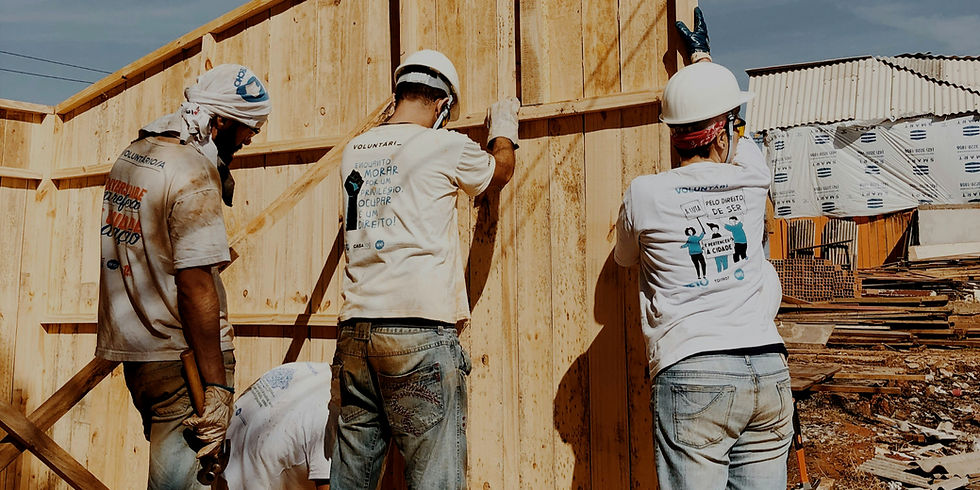
Jamaica received its independence on August 6, 1962, but after the passage of Hurricane Melissa I have come to realize how interdependent we are. A number of countries, organizations and individuals have rallied around the island to help its citizens. I am greatly touched by the aid given by the smaller islands like the Cayman Islands who was one of the first countries to come to the aid of Jamaica. And so many other countries, large and small, in the region and throughout the world have given us support in a variety of ways. I have been blessed to see how a large number of people have come to assist us, so I recognize that we can never be independent, but rather we are interdependent. If another nation is devastated by a natural disaster, we too as a country must go to their assistance. We need each other. The Apostle Paul highlighted this concept when he wrote in his first letter to the Corinthian Church about each of the body’s parts being important.
But now God has placed the members, each one of them, in the body, just as He desired. If they were all one member, where would the body be? But now there are many members, but one body. And the eye cannot say to the hand, “I have no need of you”; or again the head to the feet, “I have no need of you.” On the contrary, it is much truer that the members of the body which seem to be weaker are necessary; and those members of the body which we deem less honorable, on these we bestow more abundant honor, and our less presentable members become much more presentable, whereas our more presentable members have no need of it. But God has so composed the body, giving more abundant honor to that member which lacked, so that there may be no division in the body, but that the members may have the same care for one another. And if one member suffers, all the members suffer with it; if one member is honored, all the members rejoice with it. 1 Corinthians 12:18-26
Jamaica is the member who is suffering right now, and so many people have suffered right along with us. They have cried with us, climbed over obstacles to get to our marooned people, gave food to our hungry, provided medical attention to our sick, and procured shelter for our homeless and roofless. We have needed all these people to come to our assistance, or else many Jamaicans would not have survived the aftermath of this horrendous hurricane. Our prime minister knows we still need help from those who are outside the island, so he has called upon Jamaica’s vibrant diaspora for its support on this long road to recover, while lobbying other nations for their assistance. He, like many others, knows we cannot rebuild alone. This natural disaster has left the nation crippled and we need to be braced up by others at this time. Jamaica’s situation reminds me of a song I love to sing.
I need you, you need me
We're all a part of God's body
Stand with me, agree with me
We're all a part of God's body
It is His will that every need be supplied
You are important to me, I need you to survive
The lyrics of I Need You to Survive, delineates how God has designed humans for interdependence. We need each other to survive. We take a lot of things for granted, but when a disaster comes and everything is taken away, then we come to realize our reliance on those who supply water, food, healthcare, building supplies and even the internet. And not only are we dependent on each other, but we are also dependent on God. He supplies the very air we breathe and gives us the ability to breathe. Without Him, we cannot survive. There is no one who is so rich or influential that they don’t need God, whether they realize it or not. King David, however, understood that he had to depend on the Lord. I recently read this in my In Touch Ministries devotional.
Throughout the psalms, we repeatedly see David’s unwavering dependence on God. It was that passion—not his strength, charisma, or anything else—that made him a great man. Even though he had a number of failures, the Bible describes him as a man after God’s heart (1 Samuel 13:14; Acts 13:22).
Being a person after God’s own heart is linked with our dependence on Him. Our pride keeps us from acknowledging our need for God and for others. But we should remember that God hates pride. In the West, we boast about our independence and individuality. Many may even say, “God helps those who help themselves.” However, that is not in the Bible, and it is not God’s way. This is what GotQuestions.org explains about this statement.
"God helps those who help themselves" is probably the most often quoted phrase that is not found in the Bible. This saying is usually attributed to Ben Franklin, quoted in Poor Richard’s Almanac in 1757. In actuality, it originated from Algernon Sydney in 1698 in an article titled Discourses Concerning Government. Whatever the original source of this saying, the Bible teaches the opposite. God helps the helpless! Isaiah 25:4 declares, "For You have been a defense for the helpless, a defense for the needy in his distress, a refuge from the storm, a shade from the heat..." Romans 5:6 tells us, "For while we were still helpless, at the right time Christ died for the ungodly."
It is clear that God helps the helpless. We might choose to be independent and try to help ourselves in a manner which is against God. Nevertheless, the Bible is also against laziness and emphasizes the importance of working diligently. However, we must trust God with all our heart and not lean on our own understanding. We must lean on Him and let Him direct our paths, and always remember that God made us for community in which we are never independent, but interdependent on each other.


Comments