


A Repentant Heart
- 14 hours ago
- 4 min read
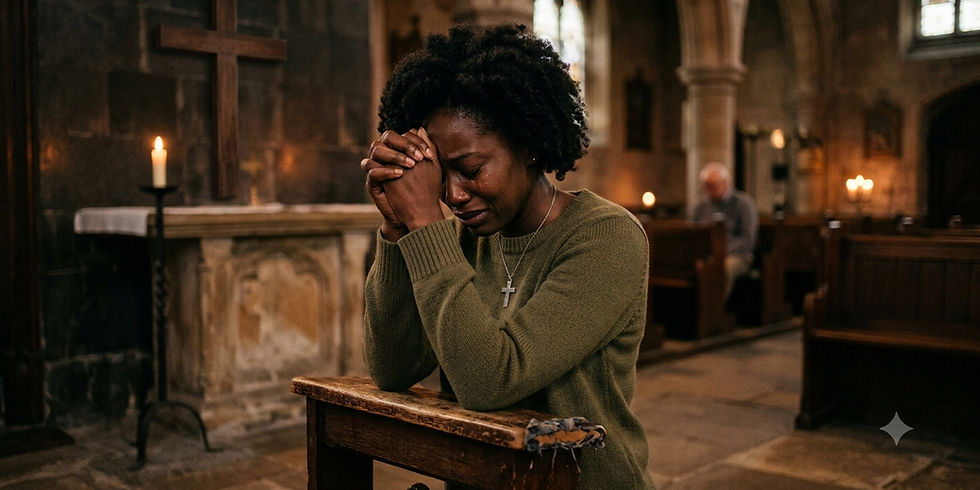
Recently, while I was reading about the story of David and Bathseba, I reflected on the fallibility of man. David was a man after God’s own heart, yet he took another man’s wife and impregnated her while her husband was on the war field, the very place where David should have been. When David found out she was pregnant, he sent for her husband to have him sleep with her as a cover-up for his own sin. But this husband, Uriah, was too honorable to have a conjugal visit with his wife while his colleagues were battling on the war field. After, David still needed to conceal what he did, so he got Uriah drunk and sent him to his house. But, again, although drunk, this Hitite did not go to be with his wife. So what did David do? He sent Uriah to the frontlines of the battlefield to be killed.
When the wife of Uriah heard that Uriah her husband was dead, she mourned for her husband. And when her mourning was over, David sent and brought her to his house, and she became his wife and bore him a son. But the thing that David had done displeased the Lord. 2 Samuel 11:26-27
This was a disgraceful plot that angered the Lord, and He would punish this man after HIs own heart. But before this was done, David had to understand what he had done, so God sent Nathan to him with a parable.
Then the Lord sent Nathan to David. And he came to him, and said to him: “There were two men in one city, one rich and the other poor. The rich man had exceedingly many flocks and herds. But the poor man had nothing, except one little ewe lamb which he had bought and nourished; and it grew up together with him and with his children. It ate of his own food and drank from his own cup and lay in his bosom; and it was like a daughter to him. And a traveler came to the rich man, who refused to take from his own flock and from his own herd to prepare one for the wayfaring man who had come to him; but he took the poor man’s lamb and prepared it for the man who had come to him.” So David’s anger was greatly aroused against the man, and he said to Nathan, “As the Lord lives, the man who has done this shall surely die! And he shall restore fourfold for the lamb, because he did this thing and because he had no pity.” 2 Samuel 12:1-6
Nathan then told David he was the rich man and outlined how he and his household would be punished. Because David was the root of Uriah’s killing by a sword, he would reap what he had sown. The sword would not leave the House of David, and even Jesus was struck by a sword. God keeps His word, and His plans will be accomplished no matter what happens. David’s son also died. Yet still, another son was born from what began as an unholy union. This son was Solomon whom God loved.
What a story! God hated what David had done, but he never stopped being a man after His own heart. David sinned, but repented when he realized the wrong he had done. He did not make excuses before the Lord, and when his son was sick, he fasted. But his son died and he faced the consequences. However, he did not stray from the Lord. David makes me remember that we have all sinned and fallen short of the glory of God. But, we should never cover up our sins. Instead, we should confess them before the Lord. And we must understand that there are times when we will have to face the consequences for the wrong we have done. However, we should never walk away from the Lord because He pardons our sins and redeems us in spite of them.
Bless the Lord, O my soul; And all that is within me, bless His holy name! Bless the Lord, O my soul, And forget not all His benefits: Who forgives all your iniquities, Who heals all your diseases, Who redeems your life from destruction, Who crowns you with lovingkindness and tender mercies, Who satisfies your mouth with good things, So that your youth is renewed like the eagle’s. The Lord executes righteousness and justice for all who are oppressed. He made known His ways to Moses, His acts to the children of Israel. The Lord is merciful and gracious, slow to anger, and abounding in mercy. He will not always strive with us, nor will He keep His anger forever. He has not dealt with us according to our sins, Nor punished us according to our iniquities. Psalm 103:1-10
Many Bible scholars believe that this Psalm was written later in David’s life. G. Campbell Morgan described it as “Perhaps the most perfect song of pure praise to be found in the Bible.” David knew all he had done and that he wasn’t deserving of God’s goodness and mercy, yet he was still given them, so he was very grateful. Charles Spurgeon wrote this about Psalm 103 in his writing, The Treasury of David.
We should attribute it to his later years when he had a higher sense of the preciousness of pardon, because a keener sense of sin, than in his younger days. His clear sense of the frailty of life indicates his weaker years, as also does the very fulness of his praiseful gratitude.
David sinned and drew the wrath of God, but when he recognized this, he repented and received God’s mercy, and he was very thankful. We too must realize our frailty and that we sin against God. But we must recognize our sins and have a repentant heart before God, while giving Him all praise. And although we may face the consequences of our sin, God will give us mercy so that we don’t receive the punishment we deserve.


Comments